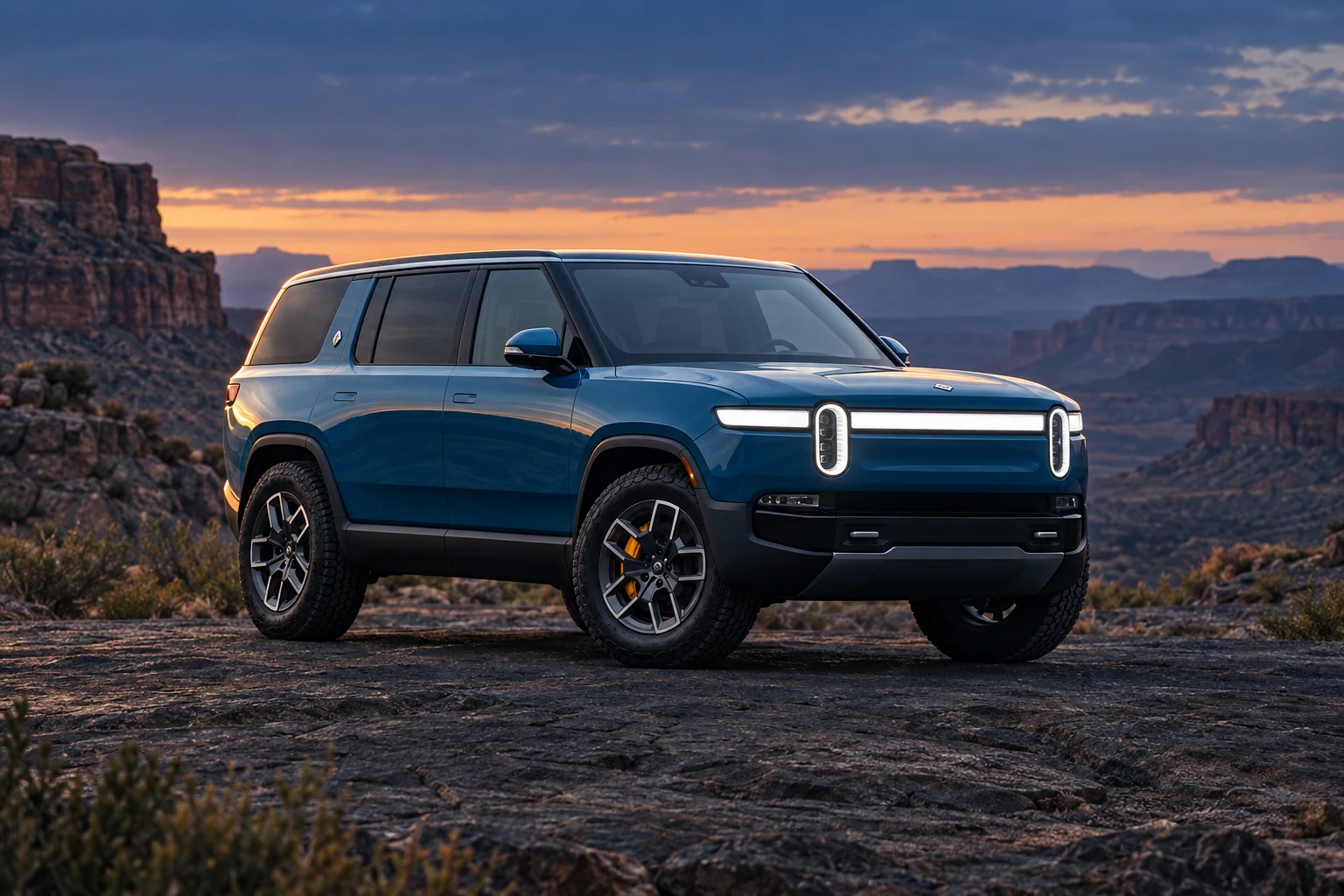
Our recommendation is to build a short panel list, compare a focused film plan with broader coverage, and keep coating as a separate decision about finish care. You do not need to decide on full-body protection before having that conversation.
Start with three situations you want to address
Before your consultation, write down what concerns you most:
- Driving: which road-facing painted surfaces do you want covered?
- Loading: where do bags, equipment or hands come close to the finish?
- Ownership: which visible areas would you most regret leaving outside the plan?
Use photographs or point to the surfaces on the vehicle. This is a way to define your priorities, not a claim that every area needs film.
PLM offers front-end, full-body and selected impact-zone discussions, with suitability and coverage assessed for the vehicle. (PLM PPF options) Ask for a recommendation that responds to your list rather than automatically expanding it.
What should an R1T owner look at?
The R1T has a truck bed and a Gear Tunnel between the bed and cabin, which create different loading arrangements from the R1S. (Rivian model comparison) Walk the installer through how you actually use those spaces.
For a useful discussion, ask about:
- Gear Tunnel doors: which painted outer surfaces and edges concern you, and which are suitable for the proposed film?
- Tailgate and bed access: where does your loading routine bring equipment close to painted surfaces?
- Side panels: would selected areas address your concern, or do you want a broader, consistent coverage plan?
Do not treat that list as a standard package or assume film is suitable for every surface. Ask the installer to distinguish painted areas from trim and other materials, then mark the actual inclusions.
What changes for the R1S?
The R1S uses a split rear hatch, with an upper liftgate and lower tailgate. (Rivian R1S hatch guidance) For your coverage discussion, open the rear area and show the installer how you load the vehicle.
Ask which painted loading edges, rear panels or door areas you want assessed. If your main concern is the front of the vehicle rather than loading, say that; an SUV body style alone is not a reason to choose full-body film.
A practical way to compare proposals is to photograph the same panels for both. You can then see exactly what the additional coverage would buy.
Is full-front coverage enough for my use?
It is an option to compare when your priority is road-facing paint, but the package name does not define every included surface. PLM advises confirming the hood, front fenders, bumper and mirrors, with headlights, A-pillars and roof edges not assumed included. (PLM full-front guidance)
If your priorities also include sides, loading areas or rear panels, ask for those as explicit additions or compare a full-body scope. The important question is whether the plan covers the surfaces that matter to you, not whether it has the biggest label.
For trail or ranch-road use, describe that use during the assessment rather than treating a package as permission to ignore damage risk. PPF does not prevent every scratch, chip or impact. (PLM protection limits)
Where does ceramic coating fit?
Coating is a separate surface treatment selected for properties such as water repellency and easier cleaning; it is not a replacement for film's physical protection on covered paint. (PLM coating-versus-film guidance) If those care goals matter to you, ask for a separate coating scope and a compatibility assessment for any film-and-coating combination.
Request a Rivian-specific price rather than assuming the coating offer for sedans and small SUVs applies. PLM quotes larger SUVs, trucks and other vehicles separately. (PLM coating qualifications)
Rivian's model-year 2025 R1T guide describes wax or ceramic coatings as optional. Ask for the specific products, written compatibility guidance, preparation, treated surfaces and applicable warranty terms; do not assume a film or coating warranty pays for every kind of damage. (Rivian R1T guide, printed page 370)
What should I check before leaving the vehicle?
Confirm the model year, existing film, prior repairs and painted surfaces to be treated. Ask the installer to explain the boundaries around openings and vehicle equipment, and how the proposed work will be checked at handover.
Before agreeing to a film or panel layout, check the owner's guide for your model and model year. Rivian provides separate guide links for different model-year groups. Ask the installer to identify the applicable film restrictions rather than assuming one installation approach fits every Rivian. (R1S owner guides; R1T owner guides)
The reviewed model-year 2025 R1T guide, software version 2024.27, says not to apply film or other equipment that could block cameras, radars or sensors, and expressly states: “Only use Rivian-supplied paint protective film (PPF).” If the proposed installation does not clearly comply with your applicable guidance, resolve that question with Rivian before proceeding. This article does not certify an aftermarket film or installation as Rivian-approved. (Rivian R1T guide, printed page 213)
Ask for care instructions covering both the vehicle and the installed products. The same reviewed guide says not to wash in direct sunlight and warns against water-repellent windshield products because they can affect rain detection and automatic wiper operation. (Rivian R1T guide, printed page 368)
Also discuss appearance: clear, matte, satin and colored films can affect the finish differently, and edges, seams or texture may remain visible. (PLM finish guidance) A sample and an agreed edge plan are more useful than assuming every installation will be invisible.
Bring a short coverage list to your quote
| Your concern | What to compare |
|---|---|
| Road-facing paint | Full-front coverage with a named panel list. |
| Loading and everyday contact | The particular painted areas you want assessed in addition to the front. |
| Protection around the vehicle | A full-body alternative, with surfaces, edges and exclusions identified. |
PLM's coverage chooser makes a useful starting point. The final plan depends on your R1S or R1T, its paint and the selected product. Discuss any areas around sensors and cameras separately before approving the scope.
To see a completed full-body Pure PPF installation at PLM, explore the Ford Bronco project. It is a different vehicle, not a Rivian case study. Use it to start a conversation about the finish and coverage you want, not to infer Rivian-specific results.
Already thinking about ownership and care? Our PPF lifespan guide separates product-warranty terms from wear, inspection and replacement decisions.
Build a plan around your Rivian
PLM's published process uses a vehicle-specific written quote identifying film, coverage, preparation, total price and applicable terms. (PLM quote process) Use that structure to review a focused plan and any broader alternative before deciding.
Send your R1S or R1T model year, current paint condition and three main concerns through PLM's PPF quote page. Ask for a panel-by-panel recommendation you can understand, not an automatic full-body package.
Request a no-obligation quote and confirm the proposed products, preparation, coverage exclusions, care requirements, warranty terms and anticipated timing. The shop confirms scope, price and appointment availability; submitting a request does not book an appointment.
Confirm the scope before booking.